

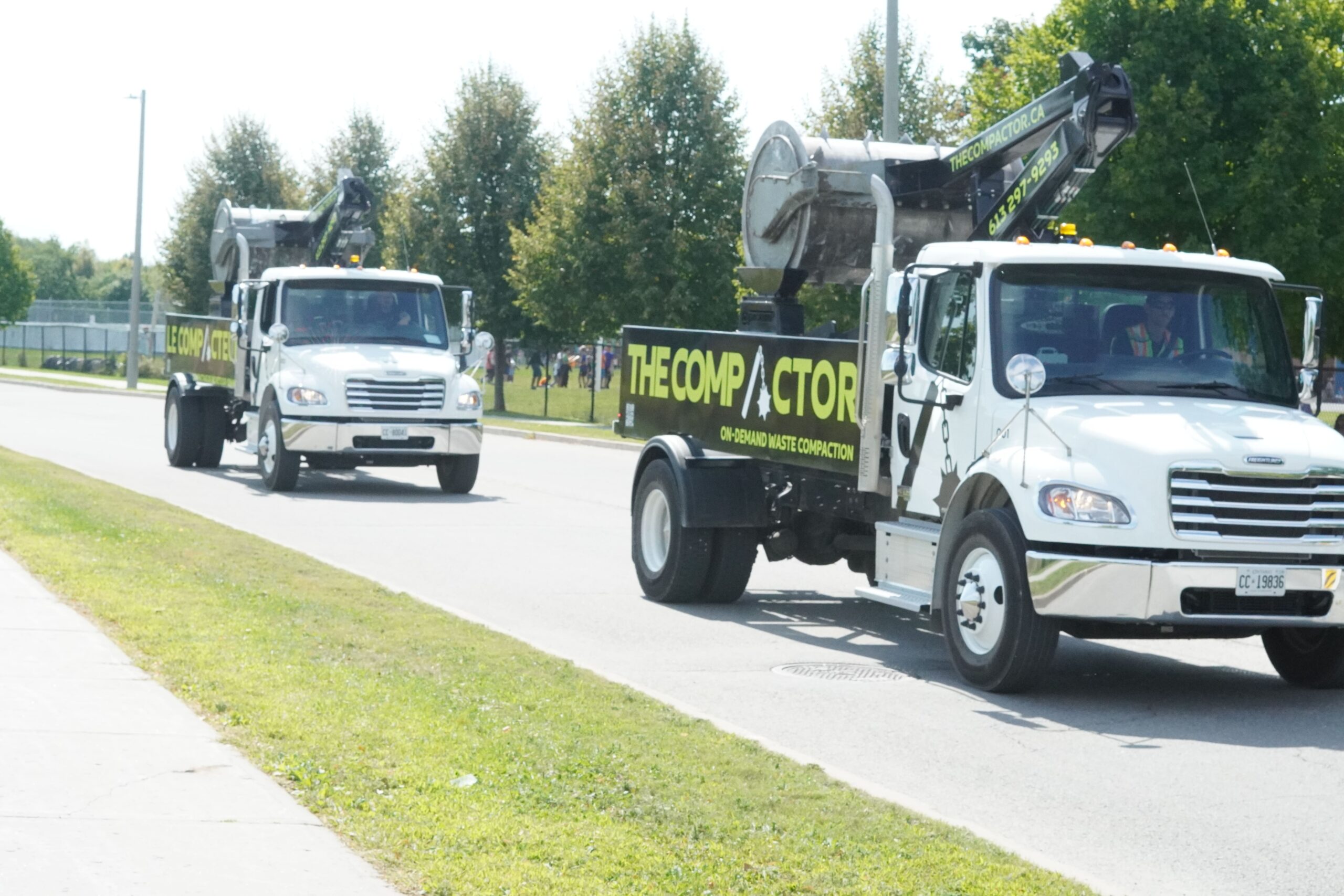
1. What Does “On‑Site Compaction” Mean?
On‑site compaction refers to compressing or baling waste directly at the location where it’s generated — a business, manufacturing site, warehouse, retail store, etc. Instead of sending loosely filled bins or containers off‑site, the waste is reduced in volume before being hauled away. This leads to fewer hauls, lower transportation costs, better space usage and improved recycling potential.
There are various types of compaction equipment businesses can use: stationary compactor, self‑contained compactor, vertical or horizontal units, balers, even auger types. The right equipment depends on your waste type, volume, space constraints and business operation.
Notably: “Loose, non‑compacted trash occupies up to 20 times more dumpster space than compacted waste.” That statistic alone underlines how much opportunity there is when you compact on‑site.
2. What Kinds of Waste Are Ideal for On‑Site Compaction?
2.1 Cardboard & Paper Packaging
Large volumes of cardboard and paper are almost always the first candidate for on‑site compaction. Retailers, e‑commerce warehouses, distribution centres and manufacturers generate a huge amount of this. A baler or compactor reduces the bulk, improves recycling logistics and frees up space. Industry resources list cardboard and paper among the primary waste fractions handled by compactor and balers.
Key tips: flatten and segregate clean vs contaminated cardboard; choose a baler/compactor rated for high volume; ensure staff are trained to feed material properly.
2.2 Plastics & Mixed Packaging
Plastic (both soft film/packaging and hard‑plastic containers) is another good candidate. Because of its low density and high volume, it occupies a lot of space when left loose. On‑site compaction improves density. Equipment suppliers list plastics as suitable materials for compaction.
Ensure you separate plastics where recycling value is involved; mixing can reduce value or efficiency. Also ensure your compactor/baler is compatible with plastics (vs only paper/cardboard). Some systems offer dual streams or combined feed.
2.3 Light Metals (Aluminium, Tin Cans, Light Scrap Metal)
Light metals — such as aluminium cans, tin cans, or thin metal sheets — are increasingly worthy of on‑site compaction. While heavy ferrous scrap may require different handling, light metals can be baled or compacted effectively. Equipment descriptions mention metal among the acceptable waste types for balers/compactor.
Benefits: recapture value (especially aluminium), reduce volume and haul costs, improve site cleanliness. Be sure to verify that your equipment is rated for metal (some are only for paper/plastics) and ensure that any heavy or sharp metal items are safe for compactor use.
2.4 Textiles, Soft Goods & Non‑Wovens
For businesses in apparel retail, returns processing, or manufacturing of soft goods, textiles and soft materials are an often‑overlooked stream. According to manufacturing compactor suppliers, these materials are within the scope of many systems.
Tip: ensure separation of hazardous or contaminated textiles, and bundle soft goods for effective compaction.
2.5 Construction, Wood, Pallets & Light Metal Framing
On construction or renovation sites, there’s a mix of waste: wood off‑cuts, pallets, light metal framing, drywall packaging, etc. While some larger or heavy items require different treatment, many pieces can be processed on‑site with compaction to reduce haulage and improve site logistics. Suppliers indicate wood, pallets and general bulk waste as suitable for certain compactor types.
Important: separate hazardous/construction‑special waste (asbestos, heavy iron, etc.), follow safety and local regulations for disposal, and ensure compactor is rated for the material mix.
2.6 Organic / Food Waste (With Caveats)
While not every business will handle this, food waste or organic‑rich streams can benefit from on‑site compaction — especially in hospitality, grocery or food processing. However, special equipment is often required (wet‑rated, liquid‑tight, odour‑controlled).
Key considerations: hygiene, drainage, regulatory compliance (food waste directives), and suitability of compactor for liquids or wet loads.
3. What Waste Types Are Not Ideal for Standard On‑Site Compaction?
While many waste streams are suitable, some are not recommended for standard compaction equipment or require specialised processing. These include:
- Hazardous materials (chemicals, asbestos, certain batteries) – these often require separate disposal protocols.
- Heavy ferrous metal items, large machinery, engine blocks – standard compactor may not be rated for them, risk damage or create unsafe loads.
- Bulk liquids or sludge – require specific systems with drainage, leak control & specialized transport.
- Contaminated or mixed streams that contaminate recycling value – e.g., mixed hazardous + non‑hazardous together, oily rags, etc.
Before investing in compaction equipment, make sure you accurately profile your waste streams, check regulatory / permit obligations and select equipment rated for the material types you generate.
4. The Benefits of On‑Site Waste Compaction
Implementing appropriate on‑site compaction delivers multiple business benefits:
- Space saving: by reducing volume, you free up site area for operations, storage or other uses. As stated, loose waste can take up to 20 × the space of compacted waste.
- Cost reduction: fewer haul trips, smaller containers, less frequent pickups translate into lower waste disposal logistics cost.
- Improved recycling / sustainability: some waste types (cardboard, aluminium, plastics) recover value when compacted and baled; lower carbon footprint from fewer truck trips.
- Operational efficiency & safety: cleaner waste areas, reduced risk of overflow/pests, better site traffic flow, improved labour productivity.
- Better site image & compliance: professional waste handling, less clutter, improved brand image and regulatory adherence.
5. How Thecompactor Can Help Your Business
At Thecompactor, we specialise in designing, supplying and servicing on‑site compaction solutions matched to your business’s specific waste streams. Here’s what we offer:
- Waste stream profiling: We assess what you generate (cardboard, plastics, light metal, etc.) and recommend the right equipment type and placement.
- Equipment selection & installation: Whether you need a vertical baler for cardboard, a horizontal compactor for mixed packaging, or a stationary unit for light metals — we help you choose and install.
- Flexible service models: We offer equipment + haul services, so you get one partner — less vendor complexity, clearer cost structure.
- Space & logistics optimisation: We help with placement, truck access, loading workflows so the compactor integrates smoothly into your operations.
- Sustainability support: We help you track compaction results, recycling volumes and show you the cost and carbon savings you’re achieving.
Want to explore how much you could save and how clean your waste area can be? Contact us today and let us help you build a smarter waste‑compaction solution.
6. Frequently Asked Questions (FAQs)
- Q1. What size or type of compactor do I need for cardboard vs light metal?
- It depends on your volume, waste type and space. Paper/cardboard often requires a baler or vertical compactor to create bales. Light metals may require a compactor rated for metal loads and may feed into a recycling stream. Thecompactor can assess your needs and recommend the correct size/type.
- Q2. Can I mix different waste types (e.g., cardboard + plastic + metal) in one compactor?
- While it’s technically possible, it’s usually more efficient to separate streams. Mixed loads may reduce compaction efficiency, recycling value and may not be suitable for some compactor types. A dedicated unit for each major stream may yield better results.
- Q3. How do I know if on‑site compaction makes sense for my business?
- If your waste volumes are significant, your site space is at a premium, you see large bulky loads (e.g., cardboard, plastics) or your haul cost is high, then on‑site compaction likely makes sense. Also consider how often you’re paying for waste removal: if pickups are frequent, you may benefit.
- Q4. Are there any waste types I should not send through a standard compactor?
- Yes. Hazardous materials, large ferrous items, liquids/sludge, contaminated loads or heavy machinery scrap often require special handling — not standard compaction. Always check with your provider and local regulations.
- Q5. What is a typical compaction ratio I can expect?
- It varies by equipment and waste type, but commercial compactor often achieve reductions in the range 5:1 to 20:1 depending on material (paper/cardboard typically higher). :contentReference[oaicite:16]{index=16}
Conclusion
From cardboard to light metals and beyond, the right on‑site compaction solution can transform your business’s waste management from a cost centre into a strategic asset. More efficient use of space, fewer haul trips, better recycling value and improved operations are all within reach.
If your business is generating significant volumes of packaging, plastics, metal or mixed waste — and you’re looking for a smarter, cleaner, cost‑effective approach — let Thecompactor help you take the next step. Contact us today and discover how powerful on‑site compaction can be.